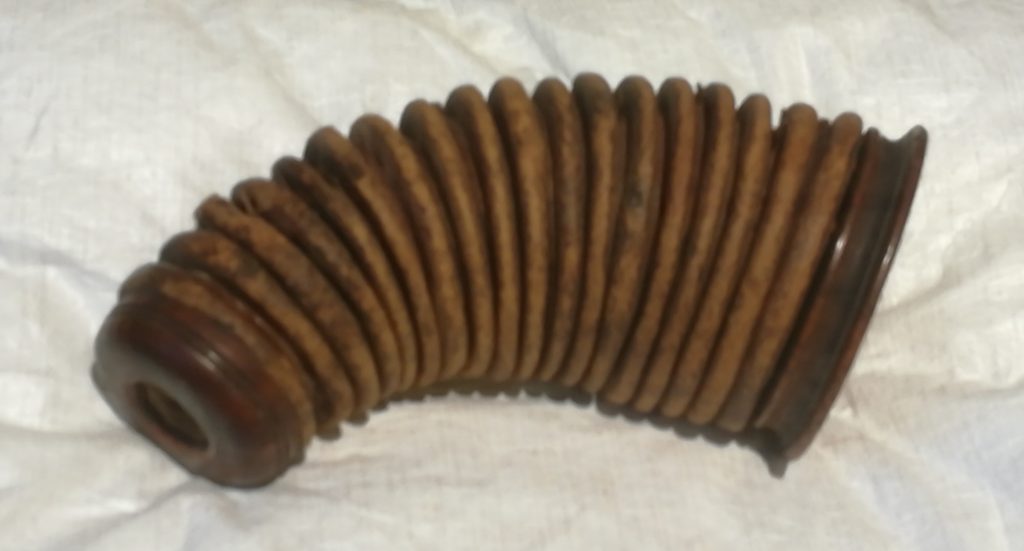
So here’s your starter for ten – of what is this a photograph? An over-fed earth-worm? A leather Roman U-bend? Part of a musical squeeze-box? Believe it or not, this is a Significant Theatrical Relic. Were you to hasten to Gough Square, off Fleet Street in London – as did I with my friend Mr Burt on Saturday last – you would find it amongst other fine mementos at the home of the late Dr Samuel Johnson. This is nothing other than the puffer David Garrick used to powder his wig before stepping out onto the Drury Lane stage, to wrench cheers and tears from his adoring public, the greatest star of 18th century England.
Davey Garrick and Sam Johnson were both products of the East Midlands, and travelled together from Lichfield to London to seek their fortunes. Throughout their days as eventual stars respectively of the theatrical and literary worlds they stayed firm friends, and now the curators of the Samuel Johnson Museum have marked the three hundredth anniversary of Garrick’s birth with a special exhibition, pulling together items from Lichfield, from the Garrick Club and other sources, and it’s a treat.
As a bonus, if you time your visit well, you may also witness there a show called appropriately “Star!” by the theatre company Palimpsest, in which the personable and talented RADAgrad Nicholas Barber (Rex Fairbrother to “Archers” fans) delivers an engaging solo performance as the young Garrick, on the threshold of greatness and aching with love for a beautiful dancer called La Violetta.
Pictures from the Exhibition:
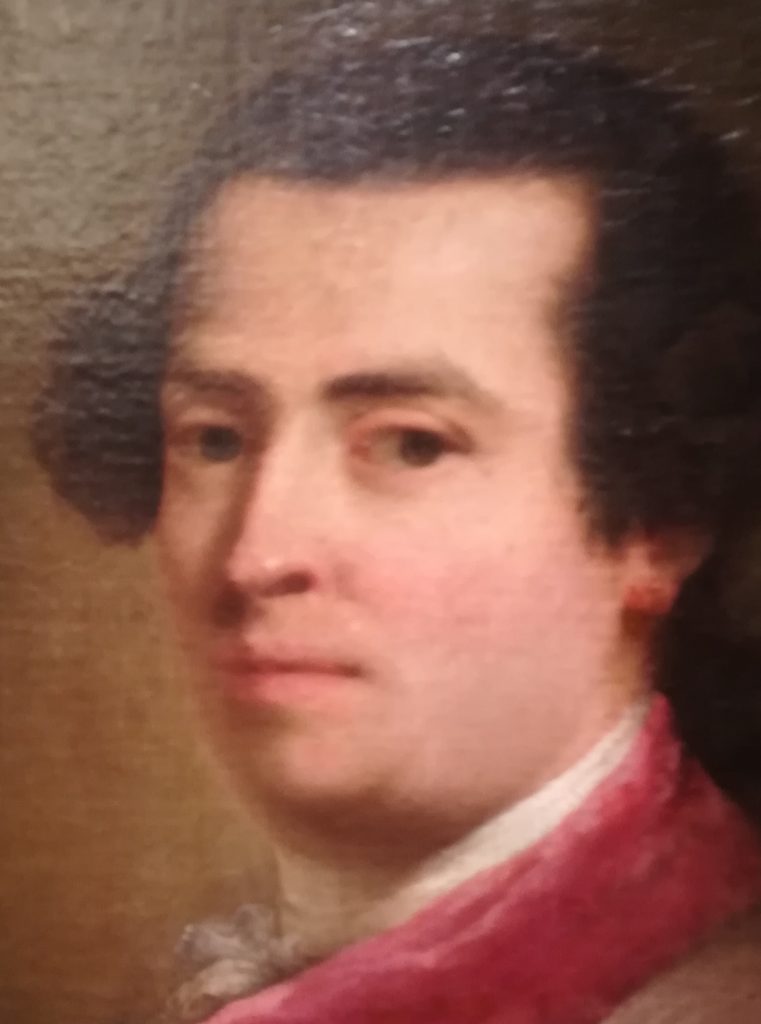
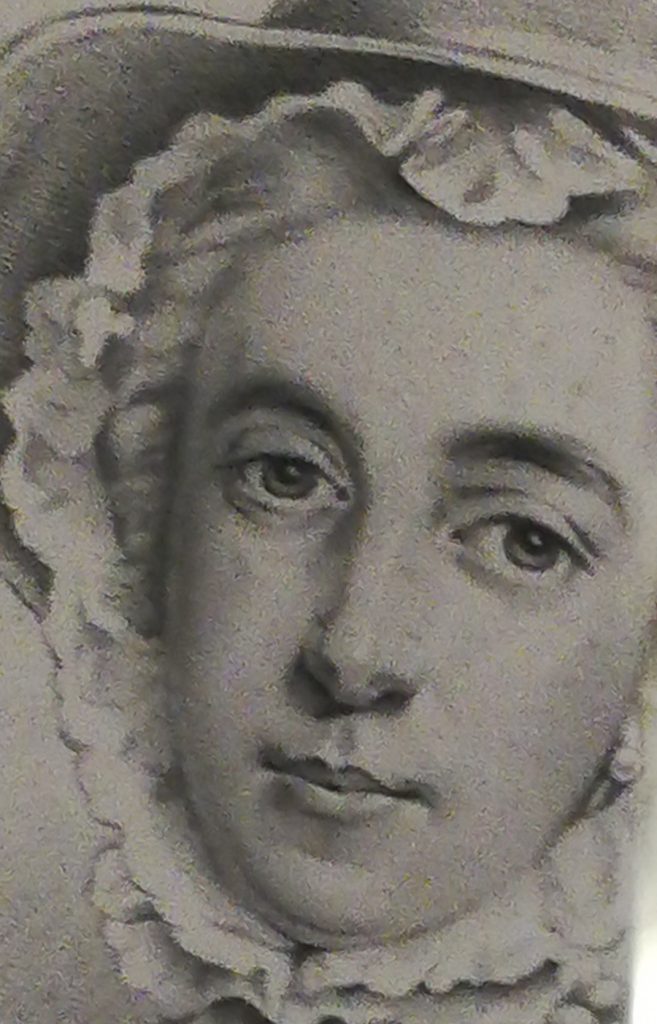
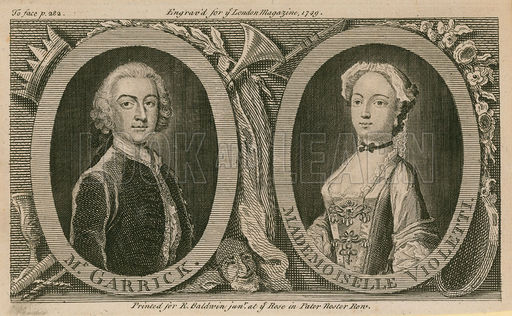
The young David Garrick, and (right) his first serious girl-friend and co-star Peg Woffington. Below he can be seen in married bliss with his adored dancer, whose real name was Eva-Marie. She was to outlive him by forty years.
Each generation of British theatre-folk has its Great Actors, from Burbage on, each age declaring that “naturalism” in acting has at last been achieved – a fascinating subject, one I’m rather given to expounding on over a glass or two, so be warned. Garrick especially was praised for his “realistic” capturing of emotional moments, reducing entire audiences to sobbing wrecks. But even then technology helped – he apparently had in his make-up box a mechanical “fright-wig”, which would allow – at the moment of encountering his father’s ghost – Hamlet’s hair suddenly to stand on end! I’ve no doubt that somewhere is a lost appendix to Stanislavsky’s “An Actor Prepares” with the heading “Your Wig: an essential aid to Emotional Memory…”
So if you’re in London, go to Gough Square and find out about one of the all-time great double-acts – Sam and Davey – there’s a link below.
I think I mentioned last time events commemorating another great theatrical original, Stephen Joseph, at the theatre bearing his name at Scarborough. There was another in early November at Manchester University, where I was lucky enough to be a student of his in the formative days of Britain’s first university degree course purely in drama, and subsequently – along with several other graduating students – an actor in his company at the Scarborough Library Theatre-in-the-Round. Sadly Stephen was taken off by cancer while still in his forties, in 1967.
Two old friends from those Manchester days, the designer Alistair Livingstone and Professor Tony Jackson organised with others two remarkable days of events, where people from all over the world gathered to salute Stephen’s contribution to the present shape of Western theatre, and indeed to the present shape of many theatre buildings, as the champion of liberating play-makers from the polite constraints of the proscenium arch, opening the way to all kinds of creative spaces, from the smallest studio to the grandest modern arena, and to all kinds of creative thinking amongst practitioners of all stripes.
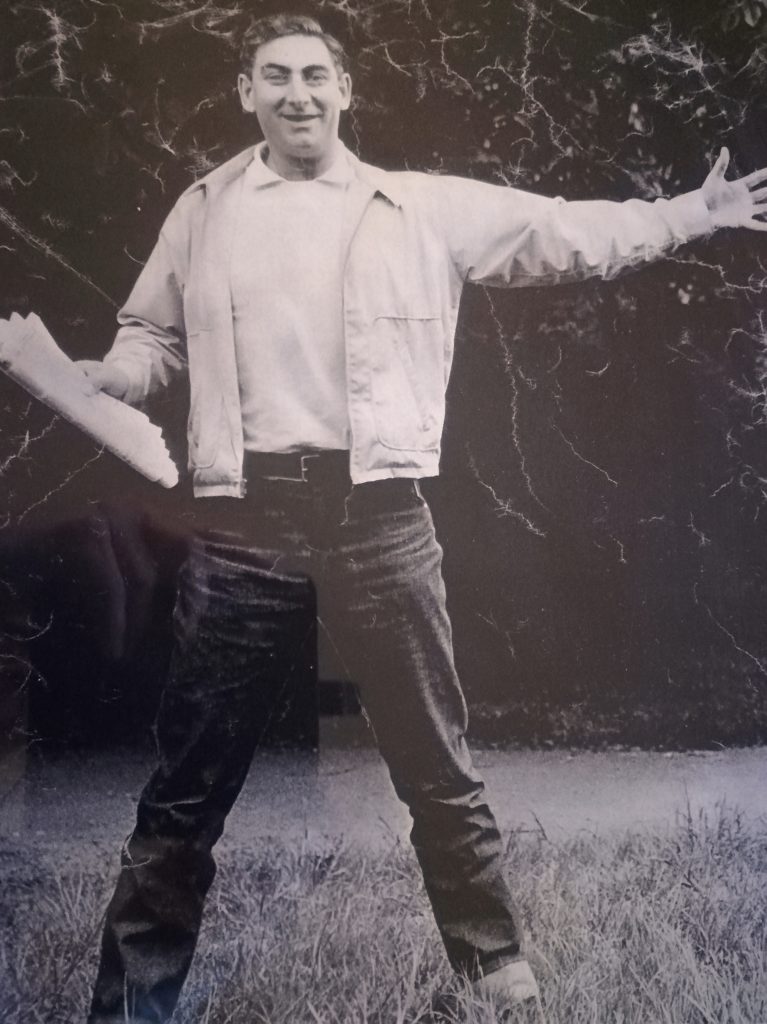
Stories, pictures and videos were swapped amongst a remarkably mixed bunch of actors, academics, architects, directors, designers, technicians and writers of plays, films and books. Some of us were given a chance to share with the current students a little of what we’d learned, and to watch them exploring with directors the possibilities SJ had opened up all those years ago.
These events at Manchester and Scarborough were unlike anything I’ve ever experienced. Many of us hadn’t met each other for more than half a century, and wouldn’t have done if Alistair and a few others hadn’t chosen to make them happen. We all knew we had been profoundly influenced by this extraordinary man, but it wasn’t until now that we realised that we were part of a unique, unintended fellowship.
Now there is a rapidly expanding Facebook presence, and work is under way to develop a brand-new Stephen Joseph Association. Old friendships have been re-kindled, sadness shared over the inevitable loss through the years of much-loved comrades, and new friendships generated. The links are below.
Back in London there are so many places reflecting the pioneering work done back in the 60s and 70s out there in the regions by Stephen and other directors who seized the times as they were a-changing – at Stoke, at Scarborough, in Manchester, Nottingham, at Glasgow, and of course Edinburgh from whence flows still the annual stream of Festival-fired fringe work. 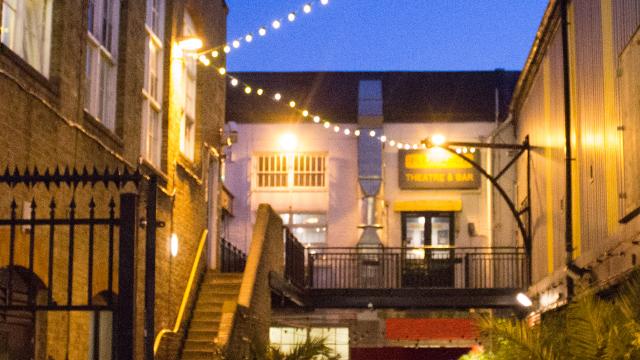 A direct link to all that in London is the PleasanceTheatre and Bar near King’s Cross – the “London branch” of a key Edinburgh venue, where last week I saw the sparky five-strong Cyphers company deliver a merry staging of “Northanger Abbey”.
 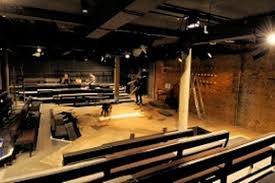 Over in west London at the Bush – once a pub theatre, now a handsome two-auditoria venue in a restored public library – the director of the Sheffield Crucible Rob Hastie has just given us a sharp insight into a same-sex relationship in crisis in “Kith and Kin”.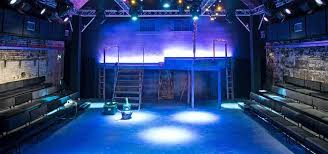
And south of the river at Southwark Playhouse Hannah Chissick – until recently the director at Harrogate – fired up a zingy account of Brecht’s “Mother Courage” with the huge, startling talent of Josie Lawrence at its core.
All three shows presented in open, unadorned staging – actors and audience combining to explore lively, potent ideas in a simple shared space. I reckon Stephen would have loved them all.
And towards the end of November I was back on the road to North Yorkshire. The most celebrated of Stephen’s theatrical descendants is of course Sir Alan Ayckbourn, and seven years on from a production of his terrific farce “Taking Steps” I directed at Shanghai Theatre Academy, that school has found the funding for a project to make Mandarin translations of more of his plays available for study and performance in China. Ayckbourn in China? But surely he’s so English? All I can tell you is “Taking Steps” went down a treat – people are people, and China is changing so quickly – theirs is a society with lots of businesses small and large, with more and more middle-class preoccupations, dealing with much the same bewildering relationship quirks as folk in Godalming or East Grinstead. With this in mind meetings were arranged to take place in Scarborough between Sir Alan and a deputation from Shanghai, led by the energetic and engaging Professor William Sun. I was asked to take part in the discussions, which were fun and positive, and all we can say at this stage is that they may start to bear fruit in Shanghai some time late in 2018. Watch this space for updates.
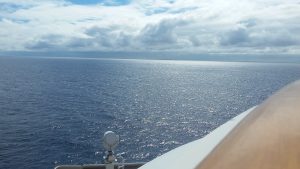
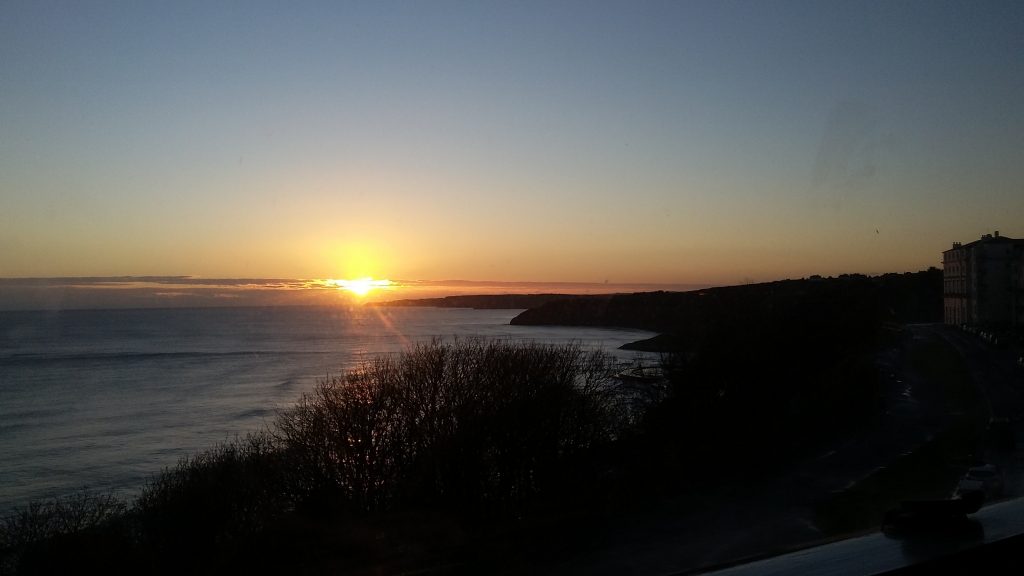
It’s always special to visit the Yorkshire coast: here’s a picture of a November dawn from my window at the Crown Spa Hotel, on the Scarborough South Cliff.
Wherever you are – may you and yours have a Very Merry Christmas.
Links:
David Garrick & Dr Johnson: https://www.drjohnsonshouse.org/index.html
Stephen Joseph Legacy Group: https://www.facebook.com/groups/713828718814959/
Stephen Joseph Association: http://www.stephenjosephassociation.org/
Books about Stephen: STEPHEN JOSEPH: THEATRE PIONEER & PROVOCATEUR by Paul Elsam
THE FULL ROUND by Terry Lane
Please respond to any of the above if you’d like to – just scroll back to the top of this page and click on the word “Comments”.
For previous entries, just scroll down

 It’s a great ghost story – a brilliant conjunction of economical writing, neat direction and terrific acting. If you haven’t seen it and you’re in London – why not go tonight? ’tis Hallowe’en after all. It’s at the
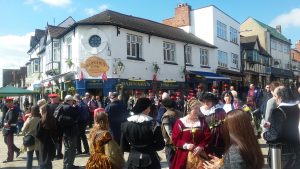
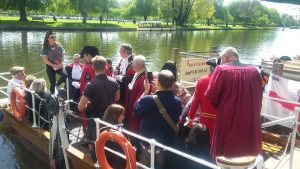
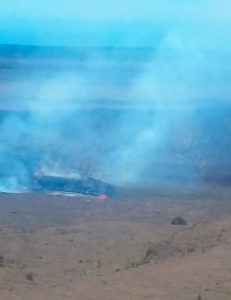
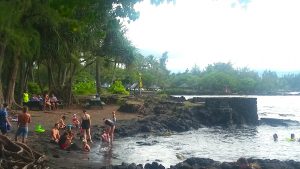
 If you’ve been paying attention, you’ll know the early summer found me teaching screen-acting on the Pacific ocean, climbing volcanoes in Hawaii, declining offers of plastic Jesus statues in Mexico, celebrating Shakespeare in Wales, and glorying in the magic of Merseyside.
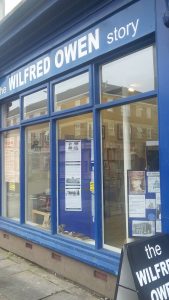 paperback in 1967 – and one of its authors, Brian Patten, included a verse tribute to Wilfred Owen, the great World War One soldier/writer who had lived and worked in Birkenhead. It’s called “Sleep Now” and there’s a manuscript copy of it in “
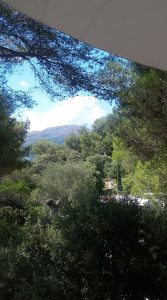 garden high above Antibes at St Paul de Vence. Well actually, all the Giacomettis were away at a big retrospective in London, but it was still a terrific place to visit, and it’s the perfect environment really to experience the fun and surprise of Miró’s and Calder’s peculiar visions.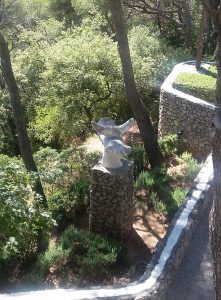
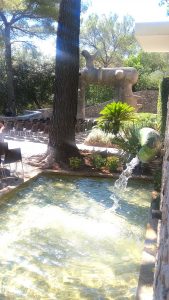

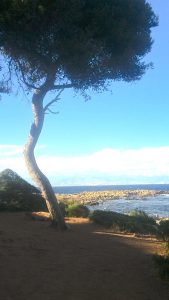 Meanwhile, down on the Azure Coast, ” le stand-up paddling” seemed all the rage, and while wandering in Nice I was led to the Ultimate Sweet Shop.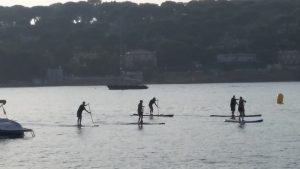
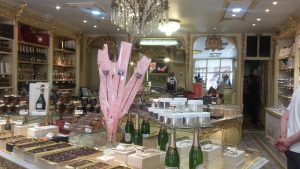
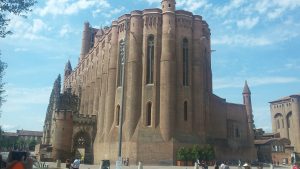
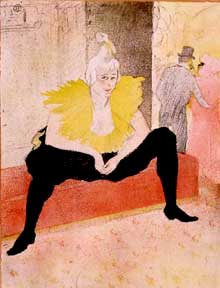
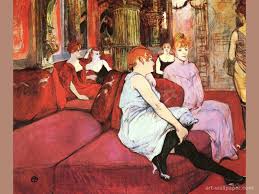 The collection is wondrous – full of zest and compassion, instantly evoking the backstage powder, perfume and sweat of glamorous fin-de-siècle Paris, the world-weary putains and their eccentric patrons, the sassy dancers and actors. Talking of which, it seems the theatre scene right now is thriving in France, generously subsidised, but only for the moment – the word is M. Macron may reign in the subsidies tout-de-suite. At Albi in the evening Jen and I came across a troupe performing an open-air show in one of the bishop’s palace gardens, a farce with masks, full of merry energy, albeit mildly bewildering.
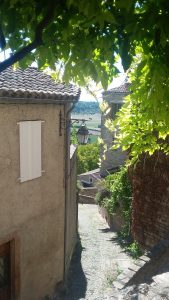 Another by-product of the Albigensian unrest was the creation of a network of fortified hill-towns, the bastides. A fine example is the town of Cordes-sur-Ciel, which I spent a happy afternoon exploring while Jen was in a yoga class. There are steep shady narrow streets with wide views of the surrounding country, some terrific medieval buildings and a stone-pillared covered market-place. There’s a deep, deep well and if you pay 50 cents you can switch on a light and look all the way down. Here’s someone getting full value.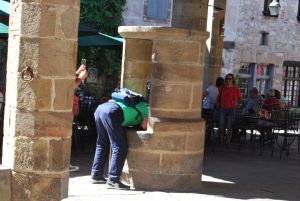
 Please respond to any of the above if you’d like to – just scroll back to the top of this page and click on the word “Comments”.
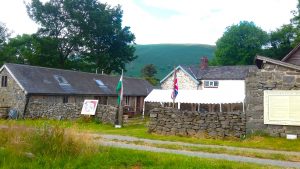
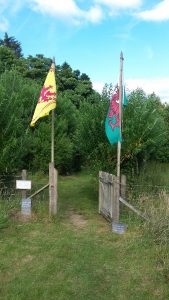
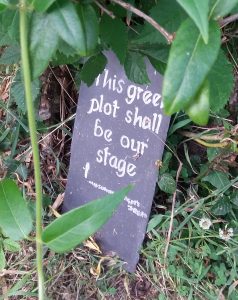
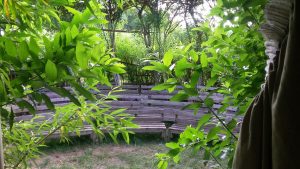
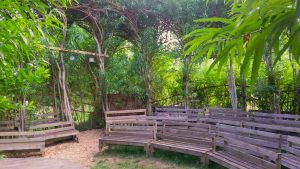
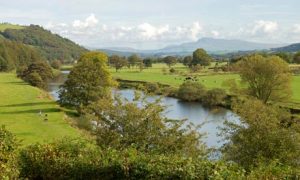
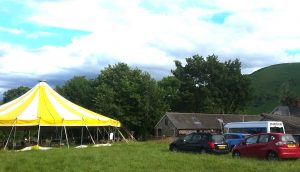 Last weekend found me there, in the land of my fathers catching up with Philip – an actor of distinction, with whom I gleefully shared a stage in Scotland some decades since, and had lost touch with until a mutual friend, Alison Skilbeck, took her show “
 s professional group has existed for over ten years, meets on a weekly basis in London, and workshops major plays in an unusual way. As I understand it, each part is learned by several actors, irrespective of gender, and for each performance the roles are played by different combinations of performers, each cast bringing a entirely new take on the way the story is told. A 20-odd strong Factory troupe had arrived by bus and car on Saturday morning, had dress-rehearsed in the afternoon – and then gone on to perform in the evening with completely different casting from the afternoon rehearsal!
 On this occasion, for the first half of “Macbeth” the genders were reversed, the Thane played by a woman, the Lady by a man. They were both excellent actors, and we the audience went along with it all, the story unfolding clearly and arrestingly. Come the interval, it was rather wonderful to see the recently-succeeded King of Scotland chatting with audience members while clutching her recently-arrived baby to her breast….Overall it was hugely enjoyable – a big audience drawn from far and wide, the first half of the show played in the open-air theatre (which is contained within a copse of willow trees) and the second half by candle-light in the yellow open marquee beside the farmhouse. It was truly refreshing, because this was genuine, spontaneous creativity – nobody was making a big deal about the gender-swap, for instance – they just asked us to suspend our disbelief while they, a troupe of actors, acted out a story. Just as actors have always done, sometimes with all-male casts, sometimes all-female and sometimes mixed, sometimes with masks or face-paint or wigs, each and every show displaying and sharing a talent to pretend.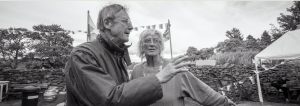
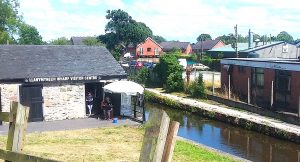

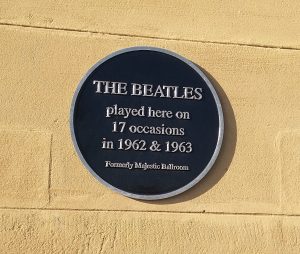
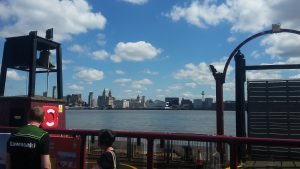
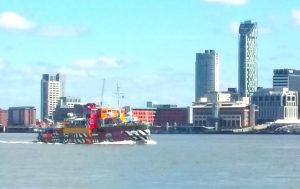
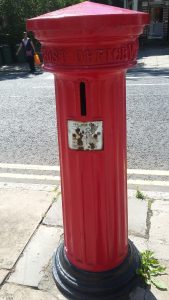
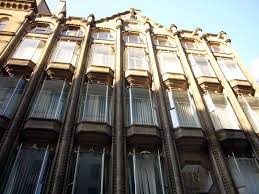 e elegant Oriel Chambers, built in 1864 by an architect with the oddly-familiar name of Peter Ellis. This was the first building with a metal frame from which were suspended outer walls of steel-framed glass – opening the door to the creation of thousands of “sky-scrapers” throughout the world.
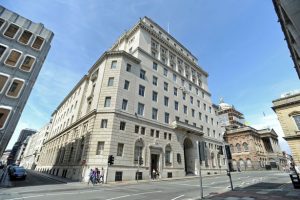 Close by in Water Street is another elegant building, the former HQ of Martin’s Bank – cue for another pub quiz moment. Did you know that in Word War 2 the bulk of the UK’s gold reserves were moved from London to the vault of Martin’s Bank in Liverpool? Robin reckons there were 3 frigates on permanent stand-by in the estuary in case of German invasion, one for the King, one for the rest of the royal family, and the third for the gold bullion – all to be whisked off to Canada.
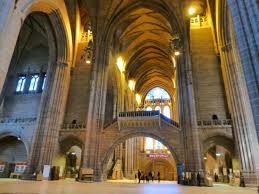 th riots and the football stadium disasters of the 1980s, and indeed helped pave the way for the Good Friday Agreement
 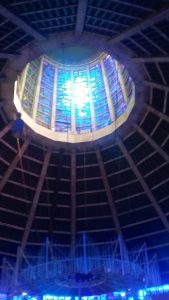 . The two cathedrals, at either end of Hope St, are both extraordinary modern buildings, one by Frederick Gibberd, the other by Giles Gilbert Scott. If you’re in Liverpool let me know which you prefer…